Low water pressure can make showers less comfortable, slow down appliances, and turn simple household tasks into a hassle. The change may happen suddenly or develop over time.
The cause could be as simple as buildup inside a faucet or as serious as a hidden leak or damaged pipe. The first step is determining how much of your home is affected.
Check Where Water Pressure Is Low
Test several faucets and showers throughout your home. Check the hot and cold water separately.
Weak flow from one fixture usually points to a nearby problem, such as buildup, a damaged supply line, or a partially closed shutoff valve. If the entire house is affected, the cause may be the main water valve, pressure regulator, water service line, or municipal supply.
Also notice whether the pressure drops when several fixtures run at once. If your shower weakens when the washing machine starts, the plumbing system may be struggling to meet the increased demand.
Mineral Buildup in Faucets and Showerheads
Minerals found in hard water can collect inside faucets and showerheads, restricting water flow.
Faucets have a small screened part at the tip called an aerator. When minerals or debris block this screen, the water may come out slowly or spray unevenly. White or chalky deposits around a fixture can also indicate buildup.
Carefully cleaning or replacing the aerator may restore normal flow. A clogged showerhead can often be handled in a similar way. If cleaning does not help, the restriction may be inside the fixture’s valve or supply line.
Partially Closed Water Valves
Sinks and toilets usually have individual shutoff valves nearby. If one of these valves is partially closed, only the connected fixture may experience weak flow.
The home’s main shutoff valve controls the water entering the entire property. If it is not fully open, pressure may be low throughout the house. A valve may have been left partially closed after a repair, inspection, or water heater installation.
Do not force a valve that is stuck, corroded, or difficult to turn. A damaged valve can break and release water. Have a plumber inspect it if it does not move easily.
A Failing Pressure Regulator
Some homes have a pressure regulator along the main water line. This device reduces the pressure from the municipal supply before water enters the home.
A failing regulator may cause weak, strong, or inconsistent pressure. You might also notice surging water, vibrating pipes, or frequent leaks around plumbing connections.
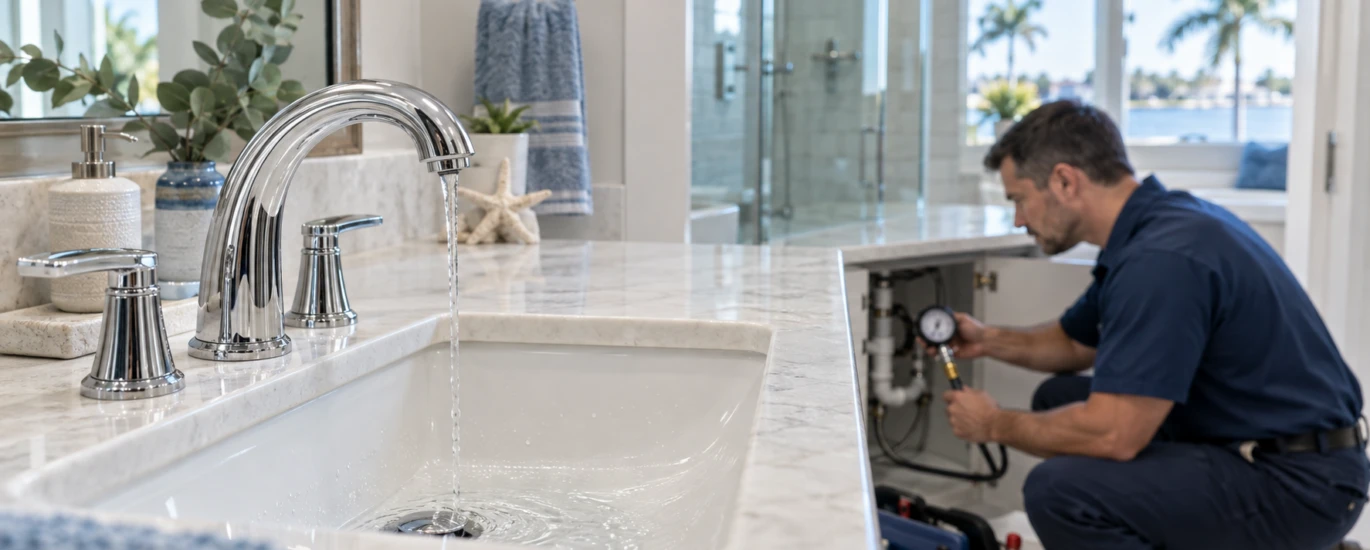
A plumber can test the system with a pressure gauge. If the regulator is causing the problem, it may need to be adjusted or replaced.
Hidden Water Leaks
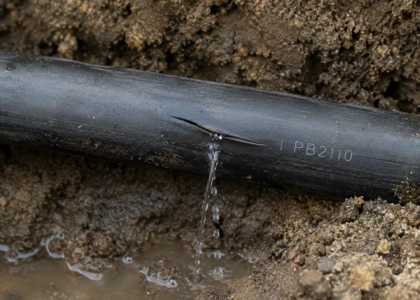
A leaking pipe can reduce pressure by allowing water to escape before it reaches your fixtures. The leak may be hidden behind a wall, under flooring, inside a cabinet, or beneath the foundation.
Warning signs may include:
- An unexpected increase in your water bill
- Damp cabinets or flooring
- Stains on walls or ceilings
- Musty odors
- Warm areas on the floor
- Running water sounds when fixtures are off
- A water meter that moves when no water is being used
To perform a basic check, turn off every faucet and water-using appliance. Then look at the meter. Continued movement may indicate a leak.
Professional water leak detection services can help locate concealed problems while limiting unnecessary openings in walls or floors.
If the pressure drops suddenly and you notice active water damage, turn off the main supply if it is safe to do so and contact a plumber.
Aging, Corroded, or Damaged Pipes
Rust, corrosion, sediment, and mineral deposits can narrow the inside of a pipe. Physical damage can also restrict water or allow it to escape. Depending on the location, the issue may affect one part of the home or every fixture.
Discolored water, recurring leaks, visible corrosion, and gradually weakening flow may point to aging pipes.
Many older properties in St. Petersburg and Pinellas County still have plumbing materials installed decades ago. Homes built from the late 1970s through the mid-1990s may contain polybutylene pipes, which can deteriorate internally without clear warning signs.
Homeowners who are unsure about their plumbing materials can learn more about polybutylene piping systems and when replacement may be considered.
An inspection can determine whether a single section needs repair or a larger part of the system should be updated.
Water Heater and Hot-Water Flow Problems
Normal cold-water pressure with weak hot-water flow often points to the water heater or a connected line.
Possible causes include sediment, a partially closed valve, a damaged supply line, or a restriction near the heater. If the issue occurs at only one faucet, the fixture’s mixing valve may be responsible.
Test the hot water at several fixtures. If weak flow occurs throughout the home, have the water heater and surrounding plumbing inspected. Repairs involving gas, electricity, and high water temperatures should be handled by a trained professional.
Municipal Supply or Water Service Line Issues
Utility work, water main repairs, and temporary changes in demand can reduce pressure across a neighborhood.
Ask nearby neighbors whether they are experiencing the same issue. If they are, check for local utility notices or contact the water provider.
When neighboring homes have normal pressure, the problem is more likely on your property. The underground service line connecting your home to the municipal supply could be leaking, damaged, or restricted.
When to Call a Plumber for Low Water Pressure
A dirty aerator or partially closed fixture valve may be easy to correct. Professional help may be needed when:
- Pressure drops throughout the house
- Several fixtures have weak flow
- The problem continues to worsen
- Only the hot water is affected
- Water is rusty or discolored
- Pipes make unusual sounds
- Your water bill increases unexpectedly
- You notice damp areas or stains
- A water valve is stuck or damaged
- Nearby homes have normal pressure
- Your home has aging plumbing materials
These signs may indicate a leak, pipe restriction, regulator failure, or another problem that requires testing.
How a Plumber Diagnoses Low Water Pressure
A plumber will first determine which fixtures are affected. The inspection may include testing the incoming pressure, checking valves, evaluating the regulator, examining the water heater, and looking for leaks.
The condition and material of the pipes may also be reviewed. Specialized equipment can help locate concealed leaks when there is no obvious source.
Depending on the findings, the solution may involve cleaning or replacing a fixture, repairing a leak, replacing a valve, adjusting the regulator, or updating damaged plumbing.
Home Team Plumbing provides plumbing installations and replacements for faucets, showers, sinks, toilets, supply lines, and other plumbing components.
Get Help with Low Water Pressure in Pinellas County
Low water pressure can have several possible causes. Identifying the source is important because replacing a fixture will not correct a leak, failing regulator, or restriction deeper in the system.
Home Team Plumbing serves homeowners and businesses in St. Petersburg, Pinellas Park, Clearwater, Seminole, Gulfport, Madeira Beach, St. Pete Beach, and surrounding Pinellas County communities. Our plumbers are available 24/7 for plumbing inspections and repairs.
If your water pressure has suddenly dropped or continues to worsen, call 727-310-4111 to schedule service with Home Team Plumbing.