Many Florida homes built from the late 1970s through the mid-1990s may still have polybutylene pipes. These pipes were once common because they were affordable, lightweight, and easy to install. Over time, many homeowners learned that polybutylene plumbing can become a serious concern.
If you own an older home in St. Petersburg, Clearwater, Largo, Pinellas Park, Seminole, Gulfport, Madeira Beach, St. Pete Beach, Treasure Island, or another nearby Florida community, it is worth knowing what type of pipes are inside your home.
Polybutylene pipes can be hard to identify if you do not know what to look for. They can also be confused with other plumbing materials, including PEX. This guide explains how to identify polybutylene pipes, where they may be located, and when to call a licensed plumber for help.
What Are Polybutylene Pipes?
Polybutylene pipes are plastic water supply pipes that were widely used in homes and businesses between the late 1970s and mid-1990s. They were used as an alternative to copper pipes because they were less expensive and easier to install.
The problem is that polybutylene pipes can weaken over time. In many cases, the damage happens from the inside out. That means a pipe may look fine from the outside while the inside is slowly breaking down.
This is one reason polybutylene plumbing is such a concern for Florida homeowners. A hidden pipe failure can lead to leaks, water damage, mold concerns, damaged flooring, ruined cabinets, and expensive repairs.
If you already know your home has this type of pipe, Home Team Plumbing offers polybutylene repipe services in Pinellas County.
Why Florida Homeowners Should Care About Polybutylene Plumbing
Polybutylene pipes are not just an old plumbing material. They can affect the long-term safety, value, and insurability of a home.
In Florida, many homes are exposed to heat, humidity, slab foundations, hard water, and high year-round plumbing use. These conditions can make plumbing problems more stressful because leaks may spread quickly or stay hidden behind walls, under floors, or near cabinets.
Polybutylene pipes may also become an issue when buying or selling a home. Some insurance companies may be cautious about homes with polybutylene plumbing. Buyers may also ask for repairs, credits, or replacement before closing.
If you are planning to sell your home, buy an older property, remodel a bathroom, or update your plumbing system, it is smart to confirm what type of piping you have.
What Color Are Polybutylene Pipes?
Polybutylene pipes are usually gray, blue, black, or white.
The most common color found inside homes is gray. Outdoor service lines may be blue, gray, or black.
The color alone does not always confirm the pipe material. Some PEX piping can also be blue, and some older plastic pipes can look similar. That is why it is best to use color as one clue, not the only clue.
A licensed plumber can inspect the pipe and help determine whether it is polybutylene, PEX, CPVC, copper, galvanized steel, or another material.
Where to Look for Polybutylene Pipes Inside the Home
Polybutylene pipes may be visible in several areas of the home. Start by checking places where plumbing lines are exposed.
Common places to look include:
- Near the water heater
- Under bathroom sinks
- Under the kitchen sink
- Behind toilet supply lines
- In laundry rooms
- In garages
- Near the main shutoff valve
- In attic spaces
- Around unfinished utility areas
- In crawl spaces, if the home has one
Inside the home, polybutylene pipes often connect to fixtures such as sinks, toilets, tubs, showers, and water heaters. In some homes, only part of the system may use polybutylene. In other homes, the entire water supply system may be polybutylene.
If you are checking under sinks or behind toilets, look at the water supply lines coming out of the wall or floor. A gray plastic pipe is one possible sign of polybutylene.
Where to Look for Polybutylene Pipes Outside the Home
Polybutylene pipes may also be found outside the home as part of the main water service line.
Outdoor polybutylene may be located:
- Near the water meter
- Near the main water shutoff
- Where the water line enters the home
- Near the foundation
- Under a slab
- Between the meter and the house
Some outdoor polybutylene water lines are blue. These are sometimes called “Big Blue” pipes. However, blue piping does not always mean polybutylene, so it should still be inspected by a professional.
If the pipe is underground, do not dig up your yard without knowing where utility lines are located. A plumber can help inspect accessible areas and determine the next steps.
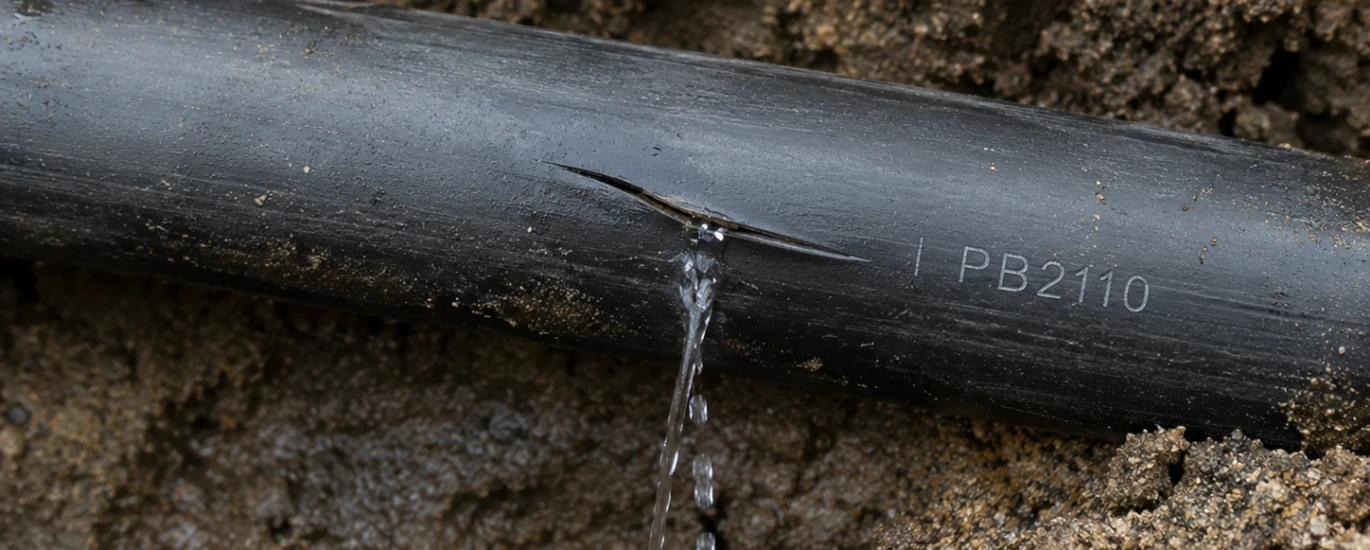
Check for Pipe Stamps or Markings
Some polybutylene pipes have markings printed on the side. These markings may include letters such as “PB” or numbers that help identify the material.
You may see markings like:
- PB
- PB2110
- Polybutylene
- SDR markings
- Manufacturer names
These markings can be faded, dirty, or hard to read, especially on older pipes. If you find any printed letters or numbers, take a clear photo and show it to a licensed plumber.
Signs Your Home May Have Polybutylene Pipes
You may not see the pipes clearly, but there are other signs that your home could have polybutylene plumbing.
Your home may be at higher risk if:
- It was built between the late 1970s and mid-1990s
- It has gray plastic water supply pipes
- It has blue pipe near the water meter
- It has had repeated pinhole leaks
- You notice water stains near walls, ceilings, or cabinets
- Your water bill has increased without explanation
- You are buying a home and the inspection report mentions polybutylene
- Your insurance company asked about the plumbing material
Repeated leaks are especially important. One leak may seem like a small repair. Multiple leaks may be a sign that the piping system is aging or failing.
If you suspect a hidden leak, Home Team Plumbing offers water leak detection services to help locate the source before more damage occurs.
Polybutylene vs. PEX: Why They Can Be Confused
PEX is a newer plastic piping material that is still used in many plumbing systems today. Polybutylene and PEX can look similar to homeowners because both are plastic pipes.
One major difference is that PEX is still commonly used for modern plumbing, while polybutylene is considered an outdated material that often needs to be replaced.
PEX may come in red, blue, white, or other colors. Polybutylene is usually gray, blue, black, or white. Since colors can overlap, it is not always easy to tell the difference by sight alone.
If you are replacing old pipes, Home Team Plumbing can install Uponor PEX plumbing systems for residential and commercial plumbing updates.
Should You Replace Polybutylene Pipes?
In many cases, yes. If your Florida home has polybutylene plumbing, replacement is often the safest long-term solution.
A small leak repair may stop one issue, but it does not fix the rest of the aging pipe system. Since polybutylene can deteriorate from the inside, another leak may happen later in a different area.
Replacing polybutylene pipes can help:
- Lower the risk of future water damage
- Improve confidence when selling the home
- Help with buyer and inspection concerns
- Support better long-term plumbing reliability
- Reduce worry about hidden pipe failures
Every home is different. A licensed plumber can inspect your plumbing, explain your options, and recommend whether a full or partial repipe is needed.
Buying a Florida Home With Polybutylene Pipes
If you are buying a home in Florida, ask about the plumbing material before closing. A standard home inspection may mention visible polybutylene, but some pipes may be hidden behind walls, under cabinets, in ceilings, or under the slab.
Before buying, it may be helpful to ask:
- What year was the home built?
- Has the plumbing ever been replaced?
- Are there any known past leaks?
- Are there insurance concerns?
- Is there documentation for prior repiping work?
- Are any supply lines still polybutylene?
If polybutylene pipes are found, you may want a plumbing inspection before moving forward. This can help you understand the cost and scope of replacement before you own the home.
Selling a Florida Home With Polybutylene Pipes
If you are selling a home with polybutylene plumbing, it is better to know before the buyer’s inspection. If the issue comes up late in the process, it can delay closing or create last-minute negotiations.
Replacing polybutylene pipes before listing may help make the home more attractive to buyers. It can also reduce concerns during inspection, insurance review, and appraisal.
Even if you are not ready to repipe right away, having a plumber inspect the system can help you understand your options.
When to Call a Licensed Plumber
Call a licensed plumber if you are unsure what type of pipes you have, if you notice signs of a leak, or if your home was built during the years when polybutylene was commonly used.
You should also call a plumber if you see:
- Water stains
- Damp flooring
- Musty smells
- Unexplained high water bills
- Low water pressure
- Corrosion near fittings
- Cracked or brittle plastic pipes
- Leaks near sinks, toilets, tubs, or the water heater
Home Team Plumbing can inspect your piping and help determine whether your home has polybutylene pipes. If replacement is needed, their team can explain repiping options and help protect your home from future plumbing problems.
Schedule Polybutylene Pipe Help in Pinellas County
If you think your Florida home may have polybutylene pipes, do not wait for a leak to confirm it. A plumbing inspection can give you a clear answer and help you plan the right next step.
Home Team Plumbing provides polybutylene repipe services, water leak detection, and PEX plumbing system installation for homes and businesses in St. Petersburg, Clearwater, Largo, Pinellas Park, Seminole, Gulfport, Madeira Beach, St. Pete Beach, Treasure Island, and nearby areas.
Contact Home Team Plumbing today to schedule service or request an estimate.